


This week, I had a Zoom call with the team at Civilization, a design studio I was introduced to through a mentor in the venture industry. They have spent twenty years working primarily with nonprofits, advocacy organizations, and causes trying to make the world more legible and more just. I went in with one question: what happens to design in a world of automation? Not just logos and color palettes, but the deeper craft of deciding what something should be and having the conviction to make it so, in a world where anyone can prompt their way to something polished in under a minute.
About halfway through the conversation, one of the co-founders said something that I have not been able to shake. The hardest part of design has never been execution. It is deciding what it should be. AI, right now, is largely pattern recognition. It can generate, remix, and approximate your preferences. But the question of what a thing needs to communicate, and what it needs to feel like to someone encountering you for the first time, that is a judgment call. And judgment calls require someone who has actually lived something.
Because of how my mind works, that concept sent my mind in three directions at once.

Three Reference Points
The first was a documentary called Exit Through the Gift Shop. It was supposed to be about Banksy. Instead, it became a portrait of Mr. Brainwash, a man who rode proximity to real artists and an instinct for replication into something that looked, at a distance, like a career. Whether he was a fraud, a genius, or just a mirror held up to an art world that had already lost the plot is a question the film never answers, which I think is the point. He forces you to ask whether the system itself is complicit in elevating replication. And in doing that, even he becomes useful.
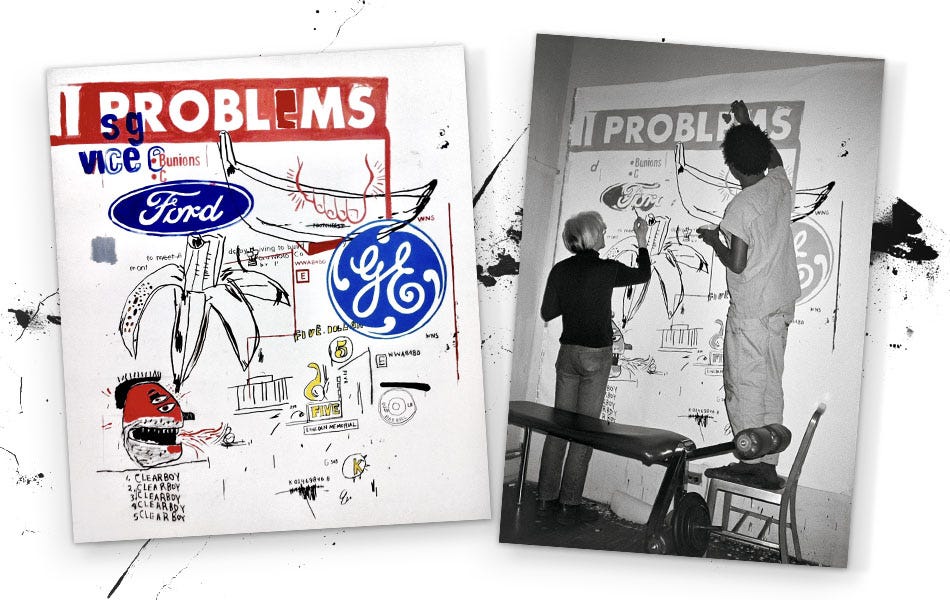
The second was Andy Warhol. The first time I really encountered his work was in my (required) Art Humanities course at Columbia, and I remember sitting there thinking, this is not art in the way I have been taught to recognize it. He was not grinding pigments or obsessing over perspective. He was selecting, repeating, and amplifying. At the time, I thought maybe he was just vampiring culture, attaching himself to whatever was already popular. But decades later, the soup cans still stand. The Marilyns still stare back at you. He was not just copying. He was diagnosing something about celebrity and consumerism that most of society had not yet learned to see.
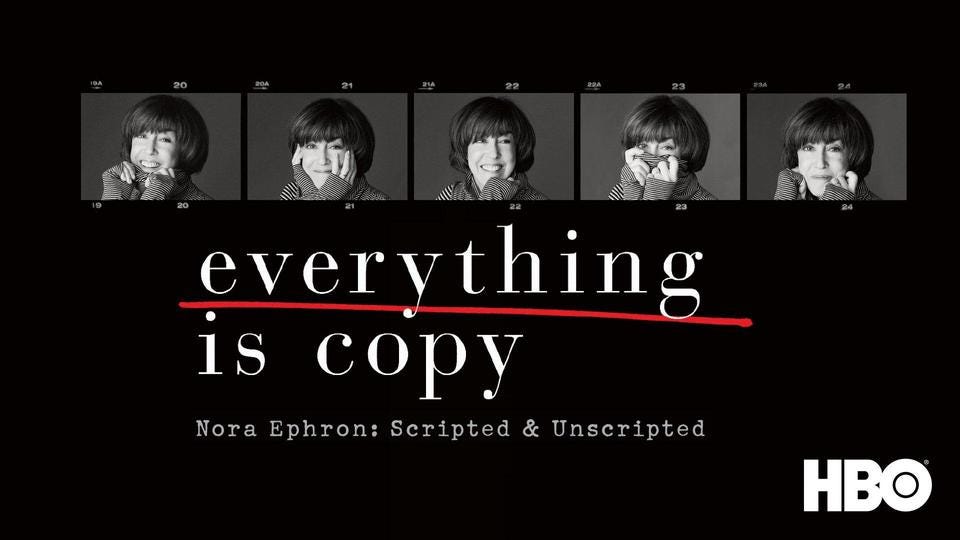
The third was Nora Ephron. There is a documentary about her life called Everything Is Copy, which was her thesis about how to live and work. Her argument was simple: life is material. Conversation, heartbreak, awkward dinners, and even betrayal. Nothing is wasted. Everything can be transformed into something that makes another person feel less alone.
Which leads to the question that connects all three. If AI can remix everything documented on the internet, and Nora Ephron remixed everything that happened to her, what is actually the difference? That is when I pulled Baldwin off the shelf.
Baldwin Sets the Bar
“One writes out of one thing only—one’s own experience. Everything depends on how relentlessly one forces from this experience the last drop, sweet or bitter, it can possibly give. This the only real concern of the artist, to recreate out of the disorder of life that order which is art.” - James Baldwin
That is the line between slop and soul.
Baldwin is not talking about style or technical craft. He is talking about extraction. Art is not the rearrangement of available inputs. It is the relentless forcing of meaning from lived experience, taking the disorder of a life actually lived and compressing it into something ordered and intentional, something that carries weight precisely because you can feel the pressure behind it.
AI can remix what has been documented. It can recombine what has been digitized. It can produce something that looks like design or reads like prose. But it cannot suffer. It cannot metabolize. It cannot extract the last drop, sweet or bitter, from a life it has actually lived. That is not a limitation that gets patched in the next model update. It is a categorical difference.
The Archive Was Never Neutral
There was a second thread in my conversation with Civilization that also resonated with me. The researcher and strategist at the firm was explaining a design library one of the co-founders has been building, focused on the history of modernist design with particular attention to resistance and protest movements, documenting the visual culture of communities that were never centered in the dominant archive. Her observation was pointed: pattern recognition can only work with what has been documented, and what has been documented is not evenly distributed.
Everything AI generates is made of what was put into it. The likelihood of any specific design choice is weighted by how often something similar appeared in the training data. Which means that generating from the dominant archive tends to reproduce dominant patterns, dominant aesthetics, and dominant assumptions about what looks credible or innovative or trustworthy. The bias is not always visible, but it is always there.
This matters beyond design. It matters for anyone trying to signal something genuine in a marketplace about to be flooded with content drawn from the same underlying archive. When the floor of acceptable output rises for everyone simultaneously, the thing that differentiates you is no longer access to tools. It is provenance. The undocumented story. The perspective that was never in the training data because it came from somewhere the algorithm did not know to look.
What the Premium Shifts To
AI will make the average acceptable, and that is already happening. A competent pitch deck, a functional brand, a passable strategy memo, all of these are now within reach for almost anyone with a subscription and a good prompt. The floor has risen and it will keep rising.
But when the floor rises, the premium shifts. Right now, I think it is moving toward three things that cannot be generated: provenance, conviction, and coherence. Provenance asks what it actually cost you to arrive at an idea, what you have seen and survived that gives your perspective weight. Conviction is the difference between someone who decided what something should be and someone who generated options and picked the one with the best metrics. Coherence is the quality of something that feels integrated, like it came from a sensibility that has been tested against reality rather than assembled from available parts.
In venture, I see an enormous amount of output right now. Pattern matching, hot takes, this-looks-like-the-next-X analysis. We are very good at recombination. The firms and founders that endure are not just recombining. They are extracting from cycles they have survived, from customers they have actually sat with, from markets they misunderstood and had to relearn the hard way. That extraction is the work. And it is work that cannot be outsourced.
So maybe the future of design, and of venture, and of any work that requires judgment, is not a battle between humans and machines. Maybe it is a sorting mechanism. The average will be easier to produce. The noise will get louder. But the exceptional will become priceless, because the exceptional will carry evidence of a life behind it. It will feel like someone actually paid attention, actually suffered the question, and actually forced from their experience the last drop it could possibly give.
That is not something you can scrape from the internet or prompt.
That is something you have to survive.
With gratitude,
earn