


I have been in enough rooms this year to notice a pattern. You walk in, the credentials are impeccable, the conviction language is fluent, and by the third sentence you realize you have heard this exact pitch before. Not a similar one. This one. Same thesis framing, same market sizing approach, same founder archetype they claim to prioritize, same language about adding value beyond the check. Different city, and let’s be honest it is the same two cities, different logo on the deck, different person across the table.
It reminded me of something I said to a friend recently when we were comparing notes on the market. Venture has become franchised. You have got a different Chick-fil-A on every corner, but it is still Chick-fil-A. Same menu. Same training. Same talking points. And the franchise model works beautifully when the market rewards consistency. When interest rates are near zero, multiples are expanding, and the rising tide floats every fund above its entry price, you do not actually need a distinct vision. You need a playbook. And for about thirteen years, that was enough.
That era is over. And the people who built their entire operating identity inside of it are now running around reacting to every new signal like a herd of wildebeest the moment one of them smells something. One nose goes up and suddenly everybody is pivoting to physical AI, and do we even all mean the same thing by that. Everybody has an agent infrastructure thesis. Everybody is at the same conference talking about the same three companies. The herd does not know it is a herd. Each individual animal thinks it is being decisive.
What I actually want to talk about is what the job requires now that the playbook era is over. Because I think a lot of people in venture, across roles, are still trying to find the new version of the old playbook. And I do not think that is what this moment is asking for.

The Specialist Is Not Enough Anymore
For a long time, we exalted the specialist. And it made sense. Information was hard to find. If you had seen twenty SaaS deals at a specific price point in a specific vertical, that knowledge was genuinely scarce. You earned something. LPs paid for access to it. Founders sought it out.
Now, anyone with the right tools and a clear question can synthesize that landscape in an afternoon. The specialist still matters, but the bar for what makes specialization valuable has moved. Knowing the space is table stakes. The edge lives in what you do with that knowledge in the actual relationship, in the room, under pressure, when the information is ambiguous, and the founder is stressed, and the board is split.
What I keep coming back to is a different kind of person entirely. Not the analyst or the specialist but the journalist. The person who is genuinely curious across domains, who can travel to unfamiliar territory and come back with something useful, who makes connections that a specialist would miss because a specialist is looking for confirmation within their frame. I grew up code-switching. Moving between different social worlds, different expectations, different registers. For a long time, that felt like a liability, like I was not deep enough in any one thing. I am now watching that skill become one of the more valuable things a person can carry into this market. Because the founders worth finding are found in all kinds of places. The patterns worth seeing cut across sectors. And the LPs worth building real relationships with are not particularly impressed by sector fluency anymore. They are trying to figure out whether they trust your judgment.
Track Records and the Era They Came From
A lot of the numbers that get cited in fund marketing right now were built in a zero-rate environment where leverage was cheap, multiples were expanding, and the biggest risk in most deals was not moving fast enough. That is a different game than what we are playing now. I am not saying those numbers are fraudulent. I am saying they were produced under conditions that no longer exist, and evaluating a manager purely on that basis is like judging a quarterback’s arm strength based on throws he made in a dome when you need him to perform outdoors in January.
There is a version of this playing out in the engineering world too that I think is more relevant to venture than people realize. A lot of experienced engineers right now feel like they have one last big payday in front of them before AI compresses their leverage permanently. They did not see the copilot and LLM solutions coming. So they are making moves, chasing the biggest contract available, optimizing for the near term, not necessarily building toward something. I see the same energy in parts of the GP community. People who built their identity and their track record inside a specific era are making decisions that are more about protecting their position than building something new. The number looks right on paper. The orientation is off.
At the same time, capital is consolidating in ways that create real pressure nobody wants to say out loud in a pitch meeting. The biggest allocators are making fewer, larger bets on a shorter list of names. Not because the emerging manager market got worse, but because when your career risk is concentrated in a single CIO tenure, the path of least resistance is writing a check to a name that will not raise eyebrows. One LP told a fund manager friend of mine that it was genuinely hard to differentiate between managers right now. I understand why she said it. I also think it is the single most important problem to solve if you are building a new firm, because the answer cannot just be better branding. It has to be something people actually feel when they are in the room with you.
The Job Looks More Like Running a Team Now
The venture game used to feel more like poker. Here are the metrics, here are the comps, here are the odds, make a decision. It was analytical. It was defensible. It was replicable. You could write a memo about why you did it.
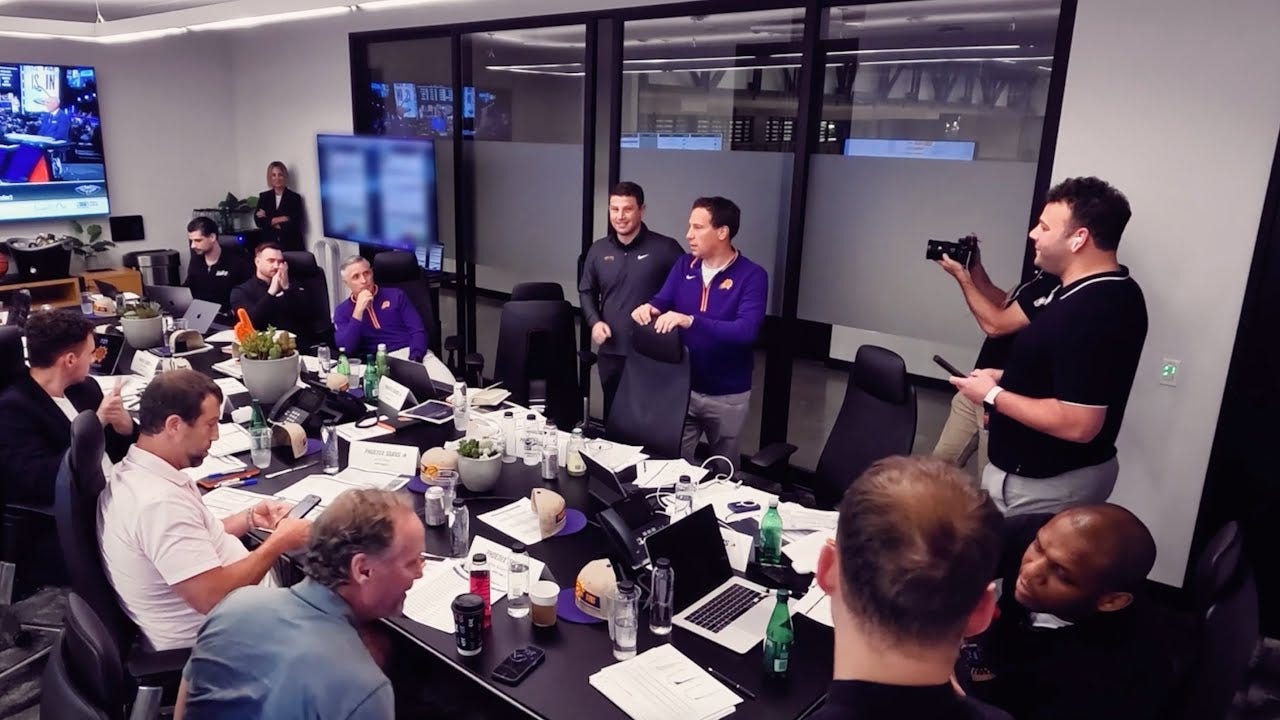
Now it feels like running the Indiana Pacers. You have a first-round pick, and you are underwriting toward an All-Star regardless of where in the draft you are selecting. But the analysis looks completely different depending on whether you are looking at a player who has four years of college tape or a teenage phenom who came out of an international league we barely track with no documented history and a lot of potential. You are not applying the same rubric. You are asking a different set of questions for each person, and the constant underneath all of it is: can this person become exceptional at the level that matters, and do I have the judgment to see it before everyone else does?
That requires something the checklist era never really tested. We can no longer lean on a hard ARR threshold as the primary signal. TAM has never felt less useful as a stand-alone metric. What I look for now alongside the fundamentals is harder to put in a spreadsheet. Learning velocity. Proximity to customers. Ability to attract talent. Resilience under ambiguous conditions. Those are not metrics you calculate. They are things you observe over time, in how someone reacts when things break, in whether they are telling you what they think you want to hear or what they actually believe.
Surviving Is the New Thriving
The firms that are not rattled by this moment are worth studying. You feel it immediately when you are around them. They are not running toward whatever is generating the most hype. They have a clear point of view, a consistent way of engaging founders, and a real thesis about why they are positioned to win in this specific environment. You know it when you feel it. They are not performing stability. They have it. The firms that thrive in chaos built something durable enough to absorb it.
The firms that are struggling tend to share something. They were built during the optimization era. Smooth processes. Clean positioning. Respectable thesis language. Nothing that would make a sophisticated LP uncomfortable. Nothing that would cause a founder to remember them three months later. When things were going up and to the right, those firms could move fast and call it conviction. Now that conditions have changed, the absence of a real point of view is suddenly visible.
Surviving in this stage of venture is thriving. I genuinely believe that. Not as consolation. As a fact. The cockroach quality, the willingness to keep going when the environment is hostile and the feedback is slow and the outcome is genuinely uncertain, that is the thing. A lot of talented people have left or are leaving because the alternatives are good and the carry checks have not come. The ones who stay, who keep doing the work and keep building relationships and keep finding the right founders in unexpected places, they are the ones who will define what this industry becomes.
One Idea Running Through All of It
The specialist, the track record, the GM analogy, the cockroach era are not four separate observations. They are the same observation from four different angles. The playbook era rewarded a specific kind of person. Someone who could execute a repeatable process cleanly, pattern match against known comps, and present a defensible thesis in familiar language. That person thrived for over thirteen years. That person is now mismatched to this moment, not because they lack talent, but because the moment is asking for something different. It is asking for judgment that cannot be systematized, relationships that cannot be automated, and a point of view that was formed through real experience rather than assembled from what everyone else is saying. The people who have that, who have been building it while the market rewarded the playbook version, are about to find that the ground has shifted in their direction.
This week, Santosh and I are recording the first episodes of Carry On. The whole premise is the stuff people do in venture but do not say in public. The X’s and O’s of how this business actually works, what LPs are observing, what founders are signaling they need, and what it costs to build a firm with integrity and a real point of view in an environment that has rewarded conformity.
If there are questions or thoughts you have always wanted someone to answer honestly about how venture works or does not work, send them our way. We want to start with the things people already know but nobody is saying out loud.
With gratitude,
earn